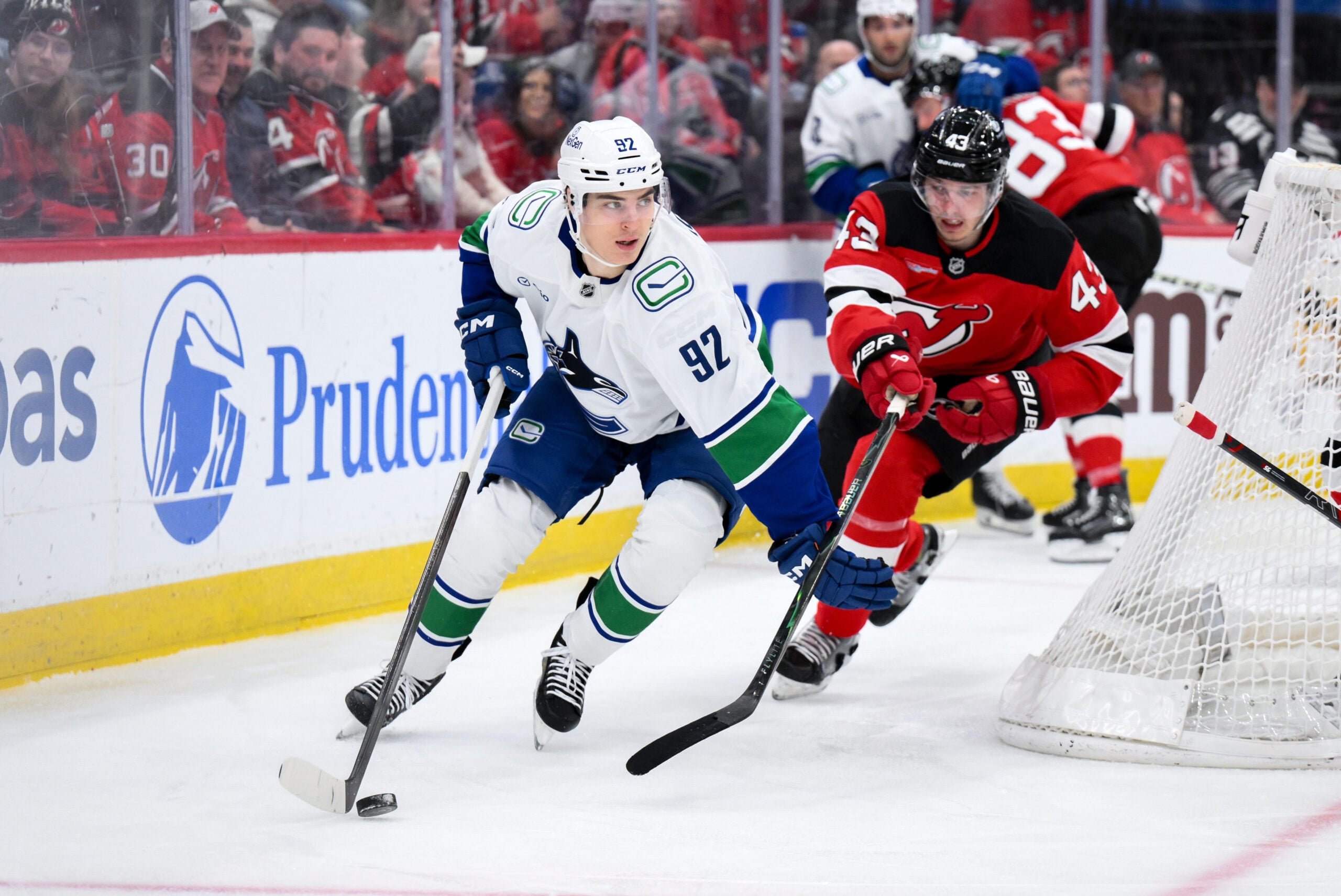
Canucks Retool Continues: Tyler Myers Trade Nets Key Future Draft Picks
The NHL trade landscape is heating up, and one of the most significant moves saw veteran defenseman Tyler Myers traded from the Vancouver Canucks to the Dallas Stars. This transaction, confirmed on a pivotal Wednesday (March 4), serves as a textbook example of how teams at different stages of their competitive window approach the trade deadline. For the Vancouver Canucks, the
tyler myers trade is another calculated step in their ongoing retooling efforts, prioritizing future draft capital and cap flexibility. Meanwhile, the Dallas Stars, riding high and aiming for a deep playoff run, have bolstered their blue line with a proven veteran presence, adding immediate value to their roster.
This deal sends a second-round pick in the 2027 NHL Draft and a fourth-round selection in the 2029 NHL Draft to Vancouver. Crucially, the Canucks are retaining a significant 50% of Myers' remaining contract, making his acquisition financially palatable for the Stars. This strategic retention drops Myers' cap hit to a mere $1.5 million for the remainder of this season and the entirety of next, proving that salary considerations are often as vital as player talent in today's cap-constrained league.
The Tyler Myers Trade Details: Unpacking the Assets and Strategy
The specifics of the
tyler myers trade provide a clear window into the strategic thinking of both franchises. For the Vancouver Canucks, the return of a 2027 second-rounder and a 2029 fourth-rounder might seem distant, but for a team committed to a comprehensive retool, these picks are gold. Acquiring draft capital years out allows for flexibility, offering future opportunities to select high-upside prospects, or even to package these picks in later trades for more immediate needs as the team's competitive window opens. The longer a pick is held, the more its potential value can fluctuate based on the drafting team's performance, adding an intriguing layer of speculation.
The retention of 50% of Myers' contract, which was a three-year, $3 million AAV deal signed in 2024, is a significant commitment from Vancouver. This move, however, was essential to facilitate the trade. By taking on half of the financial burden, the Canucks effectively lowered Myers' cap hit to an extremely attractive $1.5 million for Dallas. This made Myers a highly desirable asset for a contending team seeking cost-effective upgrades, demonstrating Vancouver's willingness to "pay" to shed an asset that no longer aligned with their long-term vision. This practice of salary retention is a common but powerful tool in the NHL, allowing teams to unlock trade possibilities that might otherwise be impossible under the salary cap. It highlights the intricate balance between on-ice performance, future assets, and financial planning that NHL general managers must constantly navigate.
Tyler Myers: What the Dallas Stars are Getting for Their Playoff Push
The Dallas Stars' acquisition of Tyler Myers is a clear statement of intent. They are all-in for a Stanley Cup run and are leaving no stone unturned in strengthening their roster. Myers, at 36 years old, is a seasoned veteran defenseman bringing a specific skillset that aligns perfectly with Dallas' needs. Standing at an imposing 6-foot-8 and shooting right, he offers significant size, physicality, and a reliable stay-at-home style crucial for playoff hockey. While his offensive numbers this season (1 goal, 7 assists, 8 points in 57 games) might not jump off the page, his value lies in his defensive acumen and ability to eat minutes.
Myers’ recent scratching by the Canucks due to "roster management reasons" was a strong signal that a trade was imminent. Notably, he possessed a full no-movement clause this season, which he waived to join the contending Stars – a testament to Dallas’ appeal and Myers’ desire to compete for a championship. Dallas Stars General Manager Jim Nill underscored the team’s excitement, stating, “Tyler is a veteran defenseman who will immediately add to our group.”
The Stars, who are currently enjoying a franchise-record 10-game winning streak and sit second in the Western Conference, have been actively seeking to bolster their blue line with more depth and toughness on the right side. Myers is expected to slot into a third-pairing role, providing valuable minutes behind established stars like Miro Heiskanen and Thomas Harley. His experience, shot-blocking ability, and physical presence are precisely what a team needs to stabilize its backend during the gruelling and high-stakes environment of a deep playoff run. His defensive reliability will allow Dallas' more offensively inclined defensemen to play their game, creating a more balanced and formidable defensive corps. This move demonstrates the Stars' commitment to addressing specific roster needs to maximize their chances at a championship.
Dallas Stars Acquire Tyler Myers: Blue Line Boost for Playoff Run for more details on his fit.
Vancouver's Strategic Rebuild: Future Focus and Asset Management
For the Vancouver Canucks, the
tyler myers trade is a textbook example of a retooling strategy in action. Hovering near the bottom of the league standings, the Canucks are focused on shedding veteran contracts that don't align with their future timeline and accumulating assets for the long term. This move is expected to be one of several asset sales before the NHL trade deadline at 3 PM ET on Friday, as the team continues to reshape its roster.
The incoming draft picks – a 2027 second-rounder and a 2029 fourth-rounder – are not immediate impact players, but they represent valuable future capital. For a retooling team, these picks provide opportunities to build around a core of younger talent through the draft. Draft picks, especially second-rounders, offer a good balance of potential and probability. While not as high-profile as first-rounders, many NHL regulars emerge from the second round, providing cost-controlled talent for years to come. Fourth-round picks, while long shots, can sometimes unearth hidden gems or be used as sweeteners in future trades.
The philosophy behind such a move is clear: instead of clinging to veterans on declining contracts, a retooling team seeks to maximize the return on those players, even if it means retaining salary. By shedding Myers' cap hit (even with retention) and gaining future assets, the Canucks are accelerating their rebuild. This approach is about patience and strategic planning, ensuring the team has a pipeline of talent and financial flexibility when they are truly ready to compete for the Stanley Cup. It’s a challenging path that requires difficult decisions, but one that has proven successful for many franchises in the past. To understand more about the financial intricacies, see
Tyler Myers Deal: Breaking Down Picks, Retention, and Roster Fit.
The Bigger Picture: Implications for Both Franchises Moving Forward
The
tyler myers trade encapsulates the divergent paths of the Dallas Stars and Vancouver Canucks. For Dallas, this transaction highlights an aggressive, win-now approach. They've capitalized on their strong performance and the creation of cap flexibility (including placing forward Tyler Seguin on injured reserve) to add a proven veteran. Myers brings grit, experience, and the physical metrics that suggest he'll be a key component in a demanding playoff environment. This move signals to the locker room and the fanbase that management is fully committed to pushing for the Stanley Cup this season.
On the other side, Vancouver's strategy is a testament to sound asset management and a commitment to their long-term vision. Shedding a significant portion of Myers' contract and acquiring future draft capital, even distant ones, positions them better for sustainable success down the road. This isn't just about clearing cap space; it's about systematically accumulating pieces that can be developed internally or leveraged in future deals to build a younger, faster, and more competitive team. The Canucks are playing the long game, focusing on a future window of contention rather than clinging to a present one that has largely closed. This trade is another brick laid in the foundation of their ongoing rebuild.
Ultimately, this deadline deal is a win-win, each team achieving its immediate and long-term objectives. The Stars gain a vital piece for their playoff puzzle, while the Canucks add valuable resources to fuel their future aspirations.
In conclusion, the
tyler myers trade serves as a masterclass in contrasting NHL strategies. The Dallas Stars have shrewdly added a veteran defenseman to fortify their blue line for a legitimate Stanley Cup run, leveraging cap space and Myers' willingness to waive his no-movement clause. Concurrently, the Vancouver Canucks have continued their deliberate retool, shedding salary and acquiring future draft picks that will be instrumental in building their next competitive core. This deal underscores the dynamic nature of the NHL trade deadline, where every transaction is a calculated move designed to propel a franchise towards its distinct goals.